John Schneider Is “The One”
Sixteen years after January 19, 2010, Seattle’s most important sports figure is finally running the show—and the results are undeniable.

January 19, 2010. To steal a line from President Franklin Delano Roosevelt: “a date which will live in infamy.”
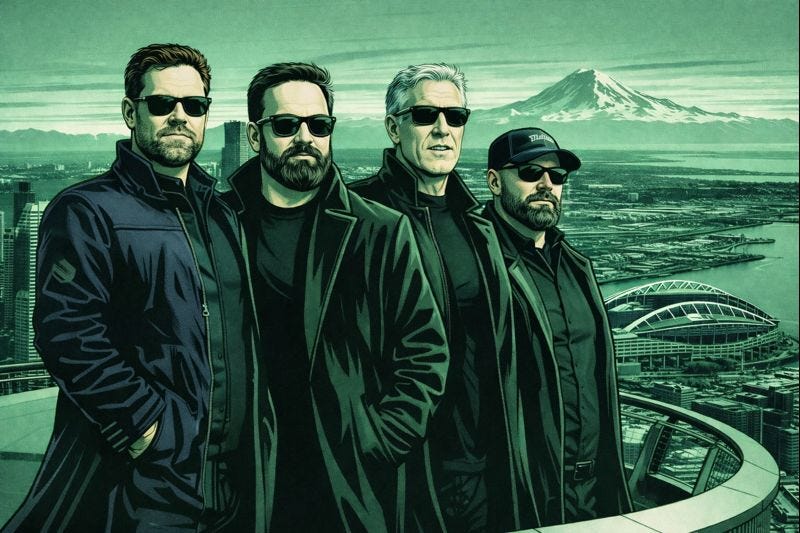
Little did we know that John Schneider would become Seahawks—and Seattle sports—fans’ Neo from The Matrix. The One.
At the time, we didn’t know it. But sixteen years later, it’s become franchise-defining—and honestly, city-altering—for sports fans in Seattle and for Seahawks fans worldwide. A lot of those worldwide fans can be credited to John Schneider, too. More on that later.
The weirdest power structure in the NFL (and why it worked)
When Schneider was hired as general manager, the arrangement was different than most NFL organizations. Normally, the pecking order goes like this: you hire a GM, the GM hires the head coach, and the GM runs football operations—including the coach and coaching staff.
Not in Seattle.
In the Seahawks’ new dynamic, Pete Carroll had final say on all football decisions. That was the price to lure one of the most successful college football coaches in history to the NFL for one more run. It was like letting the baby pick his mom.
It also meant Schneider would oversee player acquisition and the draft—but Carroll could object to any move or pick that “John Boy” proposed. Translation: if this thing was going to work, it would require real trust between two men in a highly competitive business.
Not only did the nontraditional power dynamic work—it brought unprecedented success for a franchise that, before the Pete-and-John show arrived, had tepid success at best.
Yes, they’d been to a Super Bowl five years earlier. Yes, they’d won some playoff games. But they weren’t a national brand. People outside the Pacific Northwest didn’t talk about them—and in a lot of cases didn’t even take the time to care.
That 2005 season Super Bowl run felt like an aberration. Like the Chargers that one time, or the Panthers. Hey, at least we can say our team made it to the big game.
Then the Pete and John show rolled into town
And they rolled in like a cross between a circus and a rock concert.
They had their own way of doing things that confounded draft experts like Mel Kiper Jr., who eventually would just throw his hands up every time Seattle made another pick “too early” or grabbed a guy nobody else saw coming. (Remember the Bruce Irvin brouhaha?)
Eventually, Kiper had to admit the obvious: they had their own draft process… because it kept working.
They drafted a future Hall of Famer in the second round from Utah State (Bobby Wagner). An undersized quarterback from Wisconsin (Russell Wilson). A trash-talking, Harry Potter–loving, self-proclaimed nerd from Stanford (Richard Sherman).
Then you add a running back nicknamed Beast Mode and a defense called the Legion of Boom, and suddenly the Seahawks went on a run the Emerald City had never seen from any of its sports franchises.
They became one of the most popular teams of the 2010s.
In that decade, the Seahawks went 112-63-1—a winning percentage of .639, fourth-best in the NFL for the decade. They made the playoffs all but one season and won 10 playoff games. More importantly: two Super Bowls, and one Lombardi (we never talk about the other one).
And the franchise became marquee and notorious. They had an edge. They weren’t the nice Northwest guys from Steve Largent’s past. This was Richard Sherman trash-talking Tom Brady after beating the Patriots and barking at a future Hall of Famer: “You mad, bro?!”
That kind of attitude attracts a different kind of fan—one we good, wholesome PNWers had never experienced.
I’ll never forget talking to a guy at the Pro Football Hall of Fame induction ceremony in the summer of 2013. It was after the Super Bowl win, and he told me his 10-year-old son from Ohio was a Seahawks fan who wanted a Richard Sherman jersey because his mom didn’t like him.
The nice little whole milk Seahawks suddenly had vodka—or Kahlúa—in the glass.
The Seahawks became global (and that’s not an accident)
Around the same time, Europe started televising the best NFL games of the week more consistently. And because of the Seahawks’ success in that decade, they’re now one of the biggest teams in Germany.
Germany has quietly become one of the Seahawks’ strongest international outposts, with multiple data points underscoring how large their footprint already is. A German‑language fan survey of more than 3,000 respondents placed Seattle as the second most popular NFL team in the country, trailing only Green Bay. When the Seahawks faced the Buccaneers in Munich in 2022, the game sold out Allianz Arena with nearly 70,000 fans and drew record‑setting German TV numbers, including 2.7 million viewers on ProSieben alone, making it the most‑watched non‑Super Bowl NFL broadcast in German history. The club’s German fan chapter already ranks as the second‑largest Seahawks supporters’ group outside Washington, and the team has since doubled down on the market by securing formal NFL marketing rights in Germany and the wider DACH region, partnering with local agencies and launching dedicated @SeahawksDeutsch and @SeahawksDeutschland channels to serve that growing fan base.
You can now find Sherman jerseys in Berlin and Lynch jerseys in Munich.
And it’s no coincidence the Seahawks played in the first-ever NFL game in Deutschland. That doesn’t happen by accident. That happens because of John Schneider and Pete Carroll.
When the magic started to fade
As the decade progressed, the team started having some clunker drafts. The core got older. And the whispers started: Did they lose their touch? Is Schneider still the personnel guy he used to be?
Nothing illustrated that more than Malik McDowell in 2017 or the Jamal Adams trade in 2020. Both were heavily criticized. Both left scars. And looking back, it makes you wonder who really wanted those moves—especially now that we’ve seen what Schneider can do without Pete having final say.
Remember the baby picking his mom?
Pete was a great coach and players loved him. But he was also unorthodox—and at times, not practical. I think that hurt Schneider’s reputation in the last five years of their partnership. He got lumped in with some of the impulsive decisions.
They didn’t always address needs head-on. They’d eat ice cream instead of vegetables. They’d chase potential instead of taking the known commodity.
January 10, 2024: the end of an era
Eventually, all good things come to an end.
That happened almost two years ago, on January 10, 2024, when Pete Carroll was out as coach and director of football operations. Going forward, John Schneider would finally get his chance to run the entire football operation—like most general managers already do.
It also became the ultimate litmus test: were the questionable moves John’s… or were they Pete using his position to get what he wanted?
In that memorable presser, Pete Carroll had this message to Schneider in his parting remarks before leaving the podium and walking out of the facility:
“It’s been 14 years, he’s been waiting for his opportunity and he deserves it.”
“And now he’s going to find out… find out, big fella.”
And just like that, it was the John Schneider show. No more warm-up act. No more debate. He could make football decisions without having to win an argument first.
Being the one in charge is different
Going from number two to the person in charge—the leader of the pack—is not for everyone. It can be a brutal adjustment.
And I can speak for myself: when you’ve been thrown into that situation and everyone’s looking at you, you realize there’s no one else they’re locked onto. They’re locked onto you—and what you’re doing.
Big fella.
It felt like, since 2010, the Seahawks always had a philosophy and a plan. I don’t know what percentage was Pete’s vision and how much was John’s, but since that day two years ago, it’s clear Schneider has his own way of doing things—and it’s been beyond successful.
Enter the disruptor
First, he plays poker with fate and luck, waiting for the chance to interview Baltimore Ravens defensive coordinator Mike Macdonald. A wait that put Seattle behind other teams early in the cycle—but a delay Schneider believed was worth the risk.
It didn’t take long for everyone’s suspicions to be confirmed: Macdonald was his first choice, and nobody else was close. John seemed fascinated with Macdonald—specifically a defense that absolutely wrecked Seattle’s offense in that 2023 matchup, 37-3.
Asked what convinced him, Schneider pointed to the on-field “product”—what he saw on film and what it felt like to play against it. He said the impact was so obvious that even Seahawks offensive players were rattled afterward, trying to make sense of what they’d just faced. Then he boiled it down to the simplest evaluation:
“He’s a disruptor… You look at the product, look at their defense.”
He’s a disruptor. That’s Silicon Valley language. That’s CEO and venture-capitalist language. That’s not supposed to be the vocabulary of an NFL general manager.
But John Schneider thinks differently than most leaders in America’s national pastime.
The post-Pete personnel era
According to reports, there were trade packages for Russell Wilson that were better than what Seattle ultimately got from Denver—but those were vetoed by Pete. Once boss man Pete finally relented and allowed Schneider to make the necessary move, the organization hasn’t stopped stacking wins in the draft and in player acquisition.
Since the 2022 draft—loaded with picks from Denver—the Seahawks have hit on 19 starter-level players. That’s basically hitting on 50% of your picks across four drafts.
That’s how you build a championship team.
Would it have happened if Pete was still ruling the roost? Who knows. But I also wonder how much influence John had on Pete over the years when Schneider was plucking gold from the crapshoot that is the NFL Draft.
Why Schneider is the Executive of the Year
Looking at this season, there’s no way John Schneider isn’t the NFL Executive of the Year.
Even if you ignore first- and second-round picks like Grey Zabel and Nick Emmanwori, and free-agent signings like DeMarcus Lawrence, look at the development pipeline:
Drake Thomas, an undrafted free agent, becoming a starting linebacker
the practice squad—and what Mike Macdonald calls “The Ready Squad”
injuries across the offensive line and secondary that didn’t derail the product, because the roster has real depth at every level
That’s talent evaluation. That’s infrastructure. That’s Schneider.
Now, to say that John Schneider—an unassuming white guy from Wisconsin with a dad bod who deflects attention and isn’t exactly Jerry Jones with media access—is the most important sports figure in Seattle history is a bold statement.
Remember Neo in The Matrix? Unassuming. Denying himself the power he really had. It took a crisis for the real talent to show—like Morpheus getting captured… or in this case, Pete Carroll getting fired—before Schneider’s full range got put on display. You saw glimpses before. But now?
Now he’s The One.
I know, Paul Allen saved the Seahawks and built the stadium. True. But without Schneider, they’d just be a pretty good team that no one in the NFL cared about.
What about Ken Griffey Jr., the man who saved baseball in Seattle? Yes, we have baseball… but how many playoff appearances since baseball was “saved”? How many World Series parades did that era create?
What about the Sonics in 1979? What about it? That was a long time ago, and the NBA was a different universe back then. It was BBM—Before Magic and Bird changed the entire league and the sport. Plus, that Sonics team lacked a true superstar, and the league itself was in such a downslide the Finals were on tape delay after your late local news.
Even though he’ll hate to admit it, Schneider is the one.
The one who helped build a Super Bowl winner… and now he’s doing it again—with a different coach, different players, and a different method, chasing the same result.
They’re three wins away from that result—and cementing him as the number one sports figure in Seattle history.
The only question left: do we name a street, park, or maybe the new terminal at Sea-Tac after him?
I’m up for suggestions.
That—and scouting your location for the eventual parade.
Postseason Awards
I think to be a big opinion writer who gets clicks and goes viral, I need to make predictions and hand out awards. I think that’s how it works on my little Substack account that could.
Here are my awards. Drum roll, please.
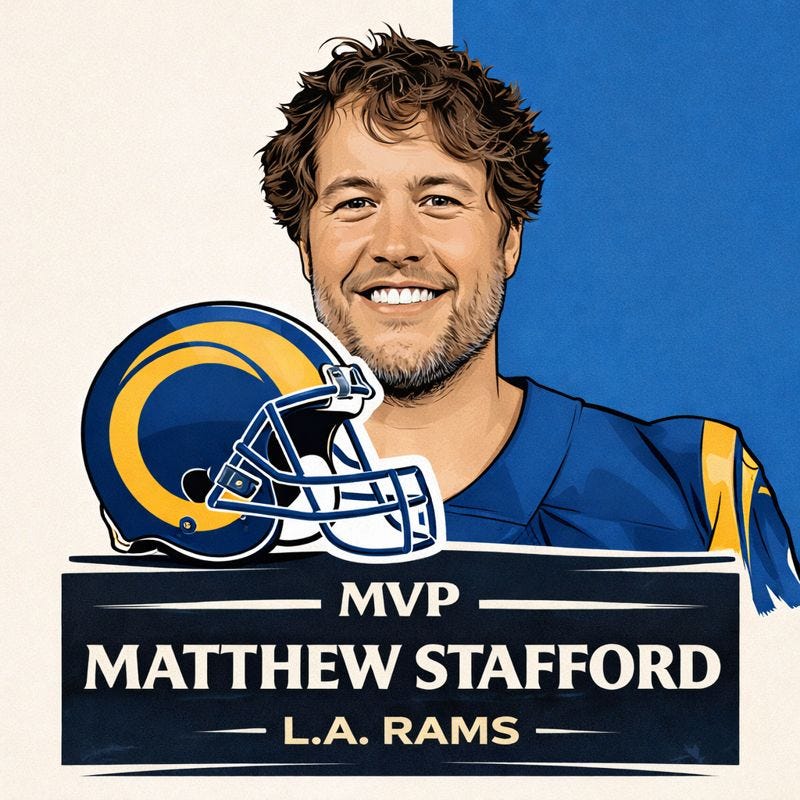
MVP: Matthew Stafford, Rams QB
Drake Maye’s candidacy is being propped up by where he plays and where the media ecosystem lives—Boston, New York, the I-95 corridor. The Patriots had the easiest schedule in the NFL.
Stafford and the Rams played in the toughest division, where three teams made the playoffs. Stafford beats Maye in passing yards (4,707 to 4,394) and touchdowns (46 to 31). Stafford faced four top-10 defenses. Maye faced a big fat zero.
As for playoff teams: the Pats only faced four, while the Rams doubled that with eight. Once again, in the toughest division in football. If it was the NFC East, they would’ve written songs about how tough that division was this season.
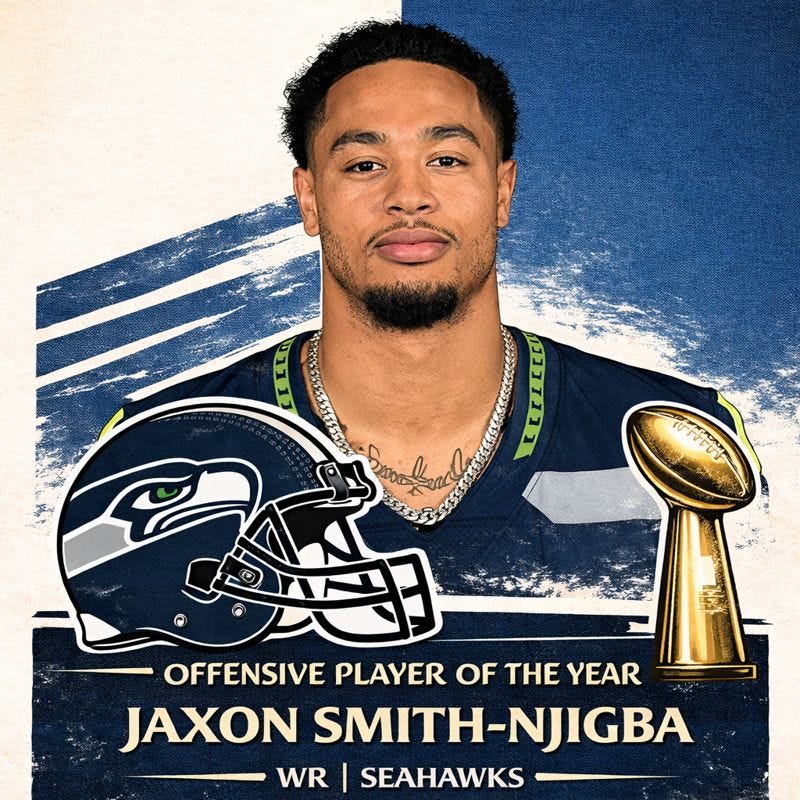
Offensive Player of the Year: Jaxon Smith-Njigba, Seahawks WR
JSN was the Seahawks passing game—36% of the team’s targets. He led the NFL with 1,793 receiving yards, had nine games over 100 yards, and added 10 touchdowns.
Oh yeah—and the Seahawks finished top five in offense, went 14-3, and earned the #1 seed in the NFC.
To the winners go the spoils.
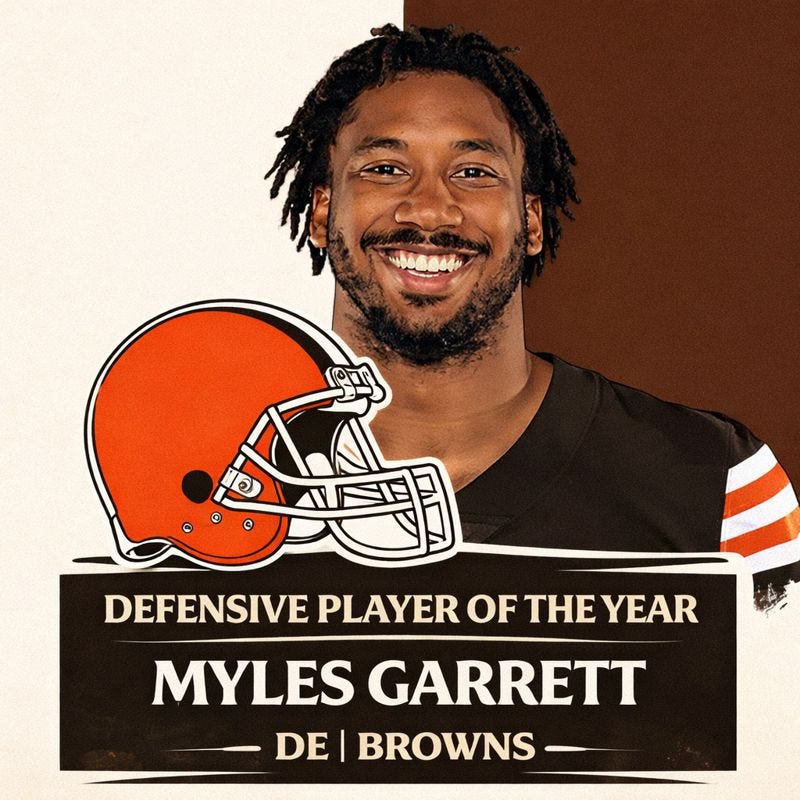
Defensive Player of the Year: Myles Garrett, Browns DE
This should be unanimous. He’s the most dominant player in the league on either side of the ball and should win MVP if the Browns didn’t suck out loud and the MVP award hadn’t become a quarterback trophy.
Oh yeah. He also broke the sack record.
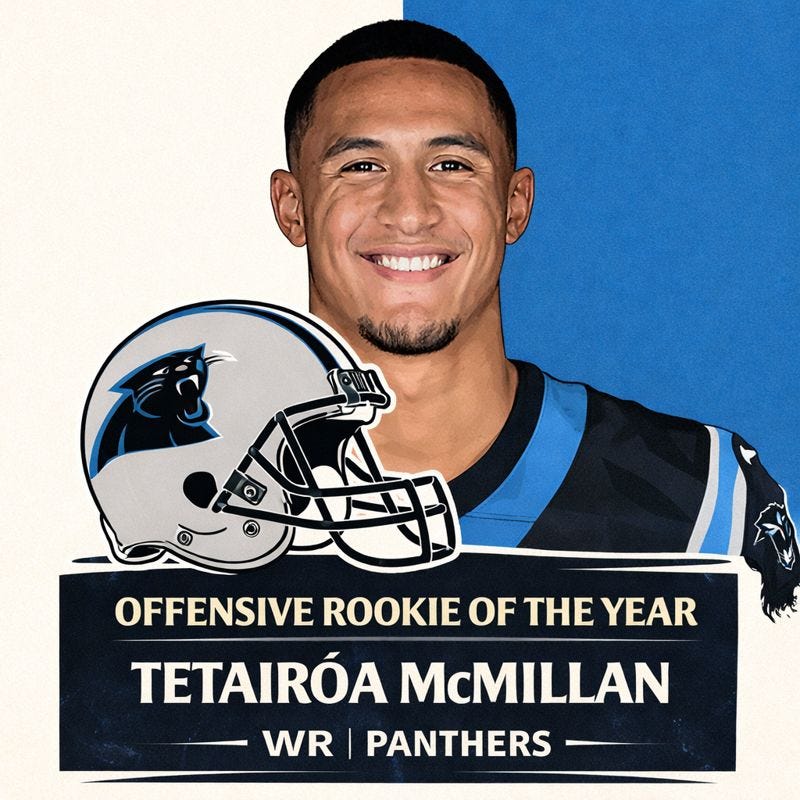
Offensive Rookie of the Year: Tetairoa McMillan, Panthers WR
I was skeptical coming out of the draft. I wondered if his game would translate. I wondered if he’d separate. Draft experts I respect had the same concerns.
At least for year one, Tet shut us all up. Give him the hardware.
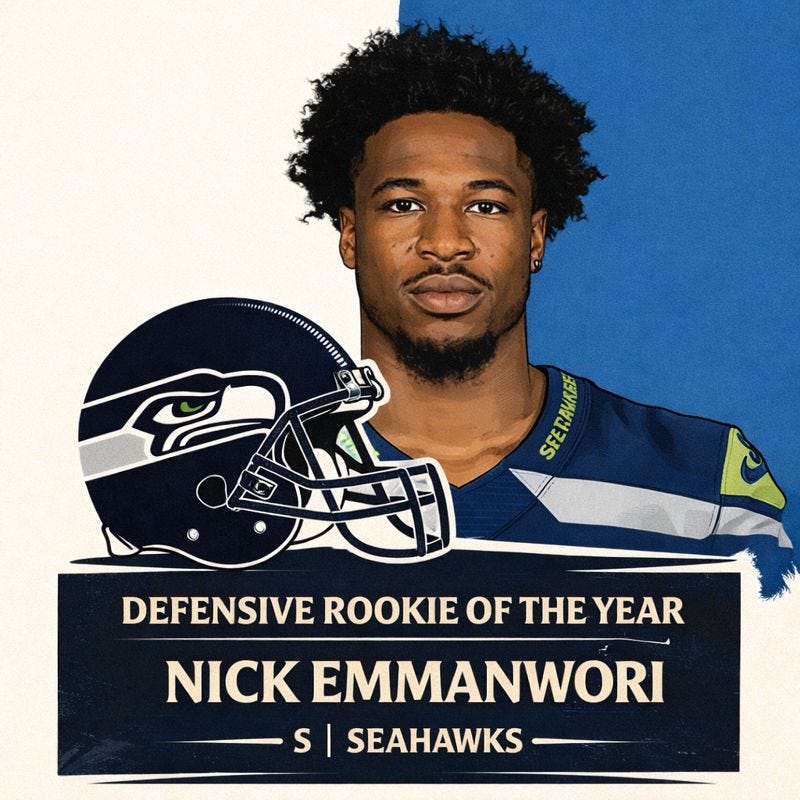
Defensive Rookie of the Year: Nick Emmanwori, Seahawks S
Nick Emmanwori was my draft crush, and I’m not ashamed to admit it.
From the first time I saw him at the Combine, to going back and watching every highlight and YouTube cut-up I could find—this was my guy. And so many times, Schneider has ripped my draft loves away at the last second that I thought it was over after round one.
Then the heavens opened, the angels sang “Hallelujah,” and the Hawks traded up to get him in the second round.
An absolute steal.
All Nick has done is prove both John and me right. Just watch the primetime game against the 49ers. He’s a difference maker—and he could help this team make a return trip to Santa Clara in February.
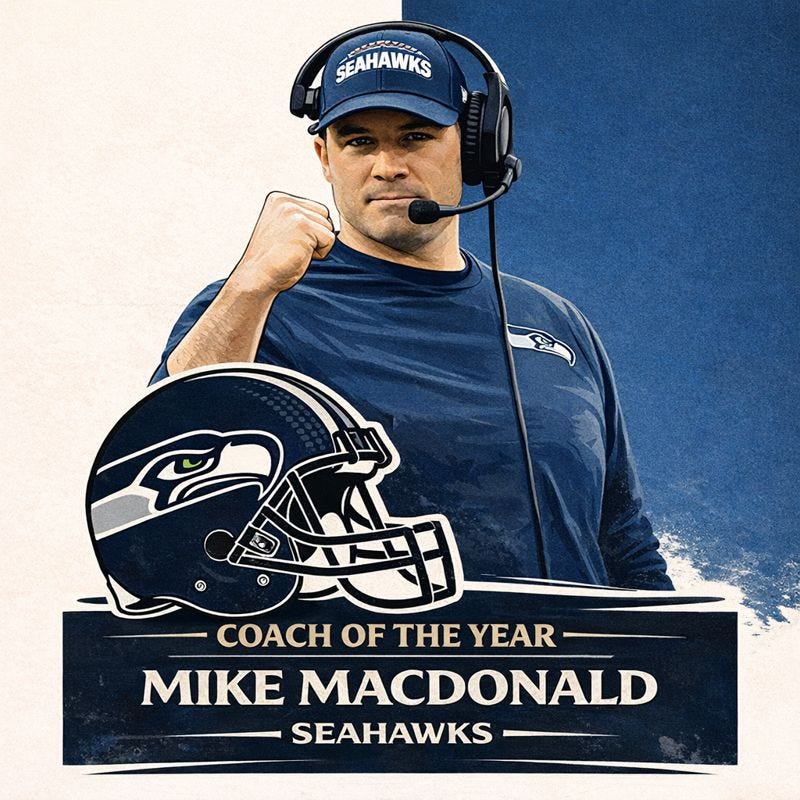
Coach of the Year: Mike Macdonald, Seahawks
Everyone is in love with Mike Vrabel and what he did with the Patriots this season. I’ll give him his flowers—but I won’t give him this award. Honestly, Vrabel has a better case than his QB, Drake Maye.
The Seahawks traded away their starting quarterback (Geno Smith) and their superstar wide receiver (DK Metcalf). They replaced them with a suspect Sam Darnold—who nose-dived in his last two games with the Vikings, costing himself millions—and a Jaxon Smith-Njigba who, fairly or not, was viewed as a slot-only guy who hadn’t lived up to the first-round label.
Macdonald led the Seahawks to 14-3, the most wins in franchise history, and the #1 seed in the NFC.
Yes, the Patriots had the same record—but once again, the easiest schedule in the NFL. The tenth-easiest since the merger and the second-easiest this century.
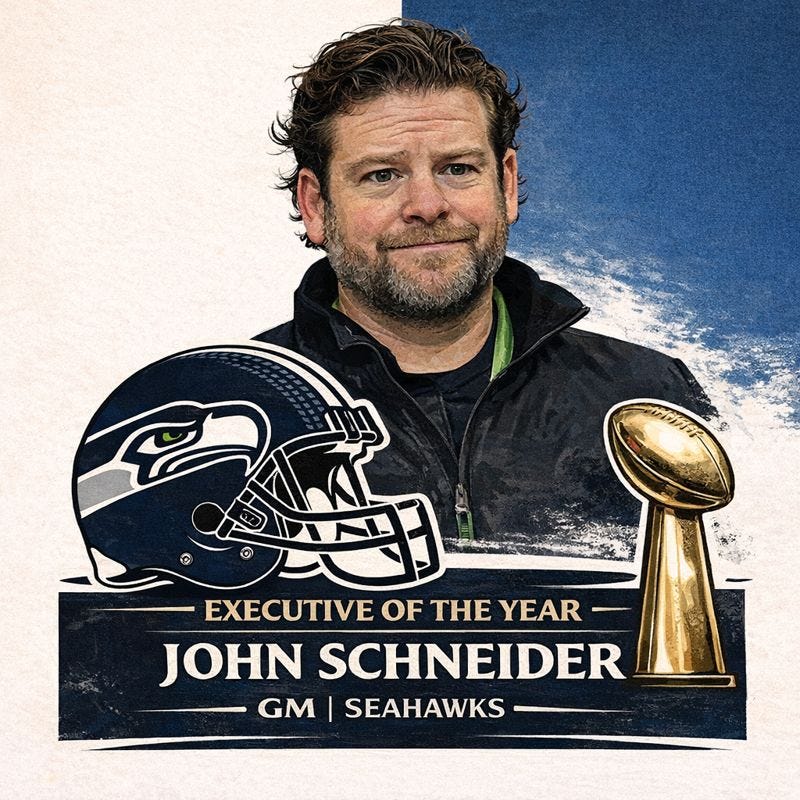
Executive of the Year: John Schneider, Seahawks GM
Please see the soliloquy I wrote to start this post.
Crown him.
Playoff Predictions:
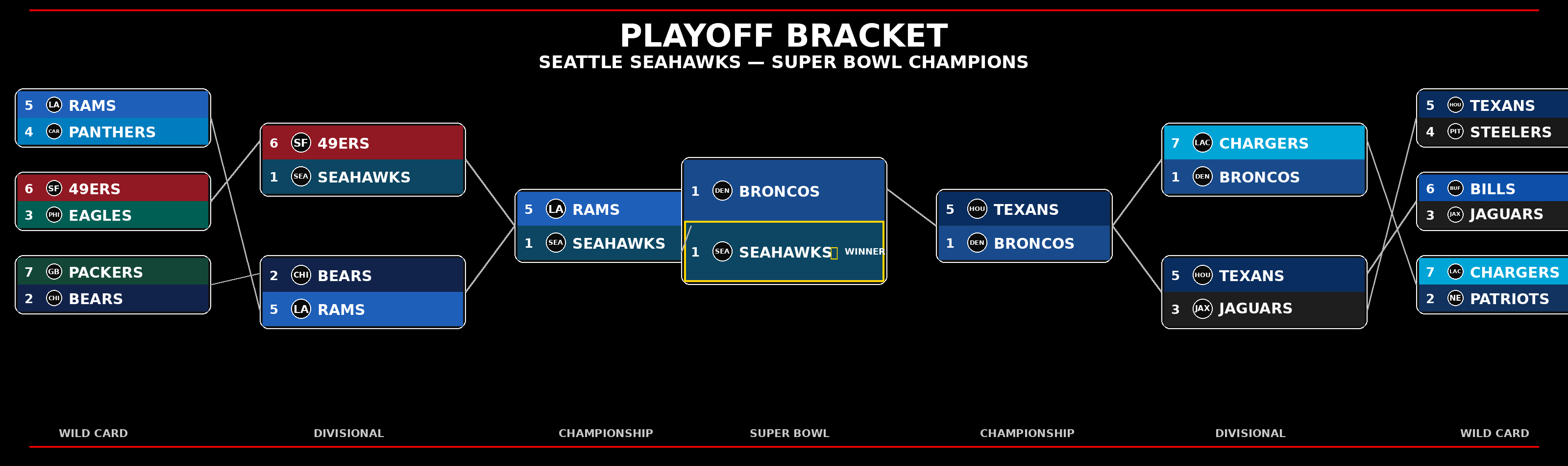
If this season has been defined by unpredictability, chaos, and just enough parity to keep everyone guessing, then I’m expecting the postseason to be more of the same. No clean scripts. No easy paths. Just four weeks of madness.